
NEWS & EVENTS

- Home
- News
- ESG Weekly News
- ESG International Weekly News 4/27-5/3
ESG International Weekly News 4/27-5/3
May 04,2026

TYC ESG Weekly: Materials, Energy, and Supply Chains Are Reshaping Corporate Decarbonization
Global sustainability and energy markets are entering a more complex phase. This week’s five ESG developments show that corporate decarbonization is no longer only about individual climate commitments. It is increasingly shaped by material innovation, renewable energy procurement, geopolitical risk, energy policy, and supply chain resilience. From sustainable textile funding and renewable power growth in Asia to oil market disruption, offshore wind policy shifts, and supplier-led renewable energy procurement, the message is clear: companies must manage carbon, energy risk, and material sourcing together.
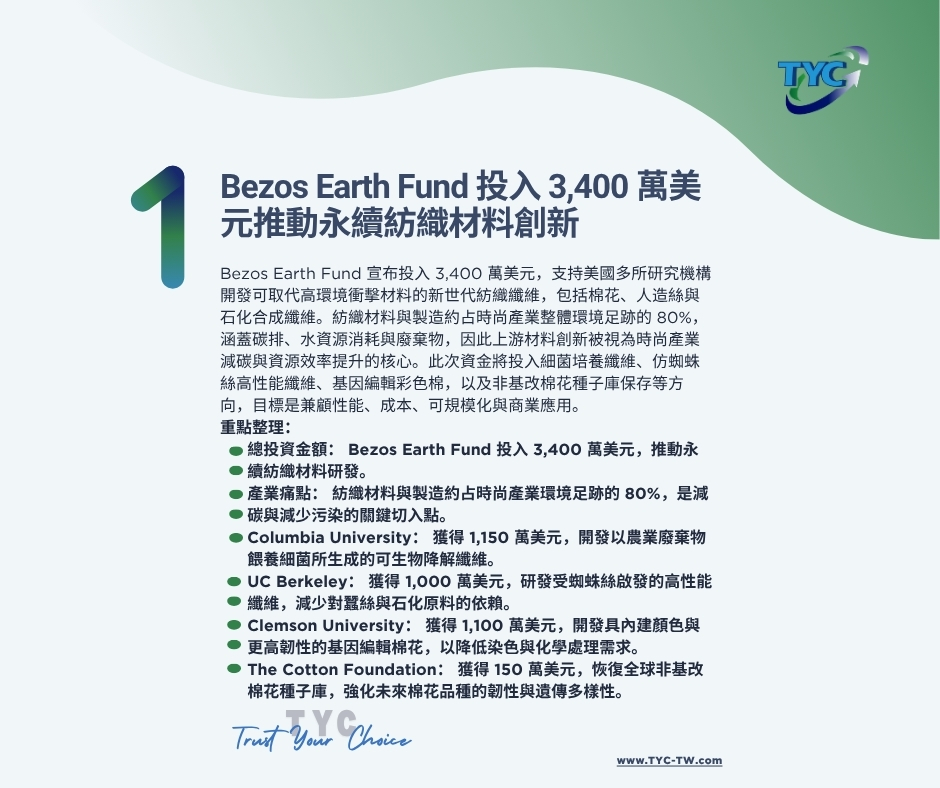
1. Bezos Earth Fund commits $34 million to sustainable textile innovation
The Bezos Earth Fund has committed $34 million to support next-generation textile fibers that could replace high-impact materials such as cotton, rayon, and synthetics. Materials and fabric production account for roughly 80% of fashion’s total environmental footprint, making upstream material innovation a critical lever for reducing emissions, water use, waste, and pollution.
The funding supports biodegradable fibers grown from bacteria, spider-silk-inspired high-performance fibers, gene-edited cotton with built-in color, and the restoration of a non-GMO cotton seed bank. This signals a deeper shift in sustainable fashion—from consumer behavior change to material science and supply chain transformation.
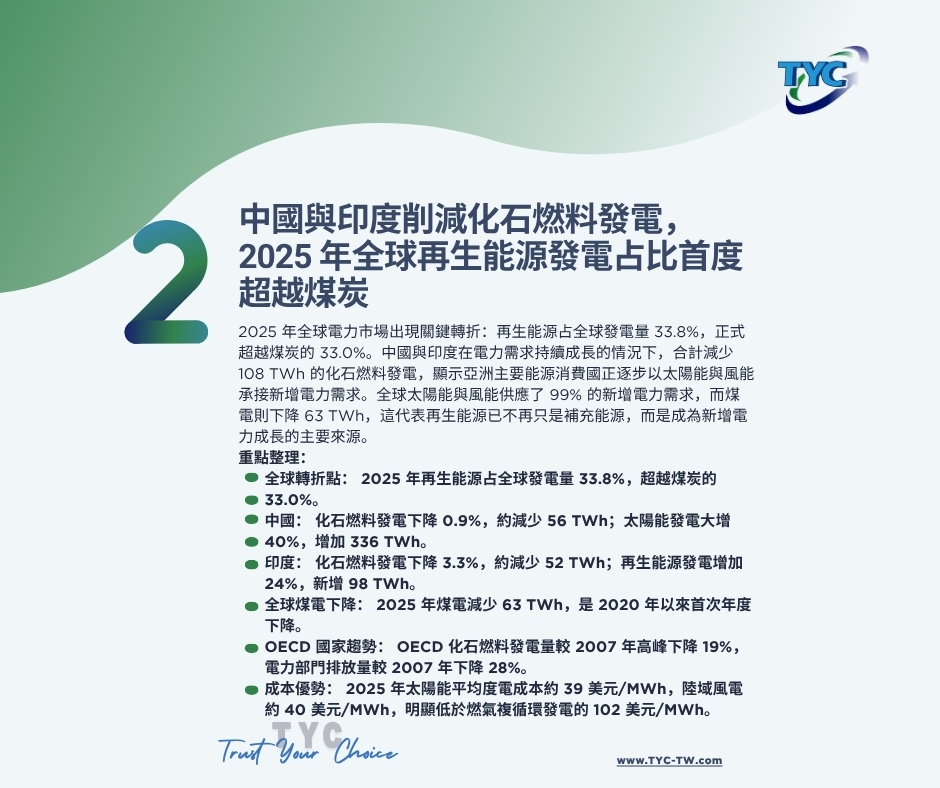
2. China and India cut fossil power as renewables overtake coal in 2025
In 2025, the global power sector reached a major turning point: renewables accounted for 33.8% of global electricity generation, surpassing coal at 33.0%. China and India reduced fossil fuel generation by a combined 108 TWh, even as electricity demand continued to rise.
China’s fossil fuel generation fell 0.9%, or 56 TWh, while solar output increased by 336 TWh. India’s fossil generation declined 3.3%, or 52 TWh, while renewable generation rose by 98 TWh. Globally, solar and wind supplied 99% of electricity demand growth, while coal generation fell by 63 TWh, showing that renewables are increasingly capturing incremental power demand.
3. Middle East conflict triggers oil shock and government intervention
A sharp escalation in the Middle East has triggered a major oil supply disruption. With traffic through the Strait of Hormuz significantly reduced, global oil supply fell by more than 10 million barrels per day in March. Oil prices rose above $100 per barrel, while diesel and jet fuel prices increased even faster.
Governments are responding with demand-reduction and market-intervention measures, including remote work, four-day workweeks, reduced school days, air-conditioning restrictions, lower train fares, free bus rides, EV leasing programs, fuel subsidies, and price caps. The crisis highlights how energy security has returned as a central priority for both governments and businesses.
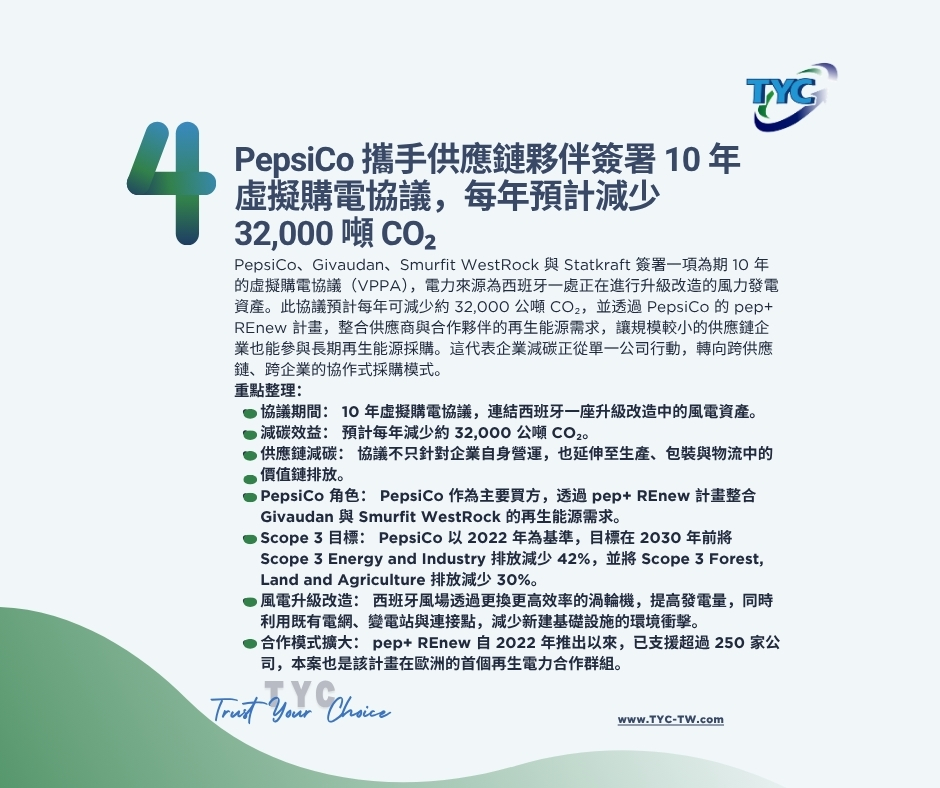
4. PepsiCo and partners sign 10-year wind deal to reduce emissions
PepsiCo, Givaudan, Smurfit WestRock, and Statkraft have signed a 10-year virtual power purchase agreement linked to a repowered wind project in Spain. The agreement is expected to reduce emissions by about 32,000 metric tons of CO₂ per year and is part of PepsiCo’s pep+ REnew program, which aggregates renewable energy demand across suppliers and partners.
This model allows smaller suppliers to access long-term renewable electricity procurement that may otherwise be difficult to secure individually. It also demonstrates how renewable energy procurement is moving beyond corporate operations and becoming a tool for supply chain-wide Scope 3 decarbonization.
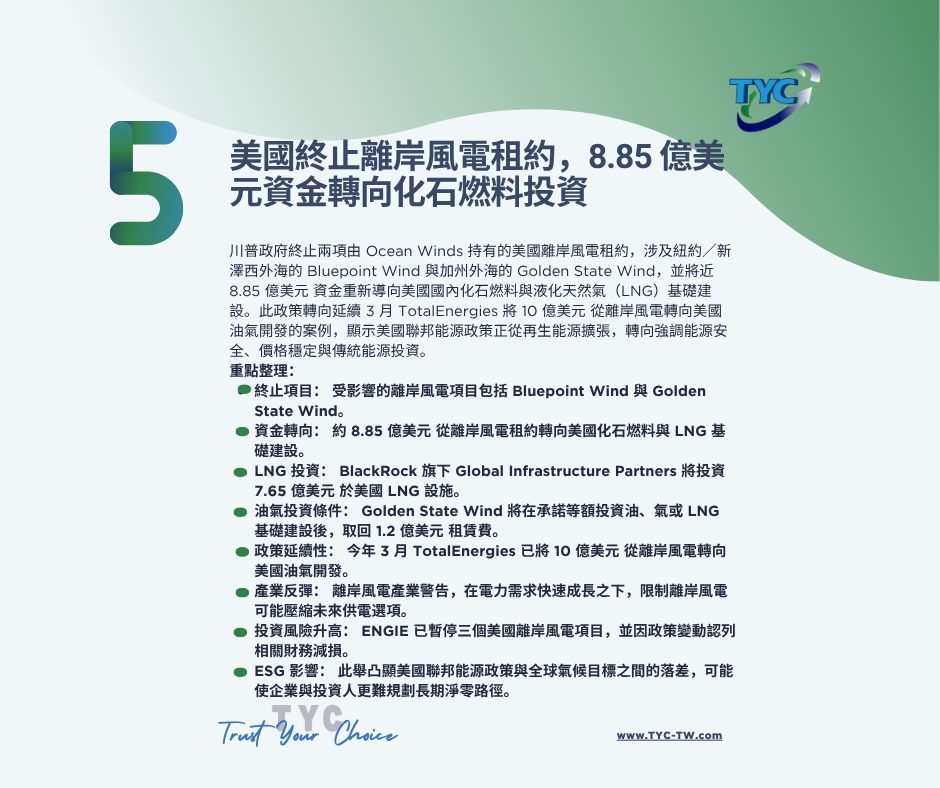
5. U.S. ends offshore wind leases as $885 million shifts to fossil fuel investments
U.S. energy policy is showing a major shift. The Trump administration has moved to terminate two offshore wind leases held by Ocean Winds, affecting Bluepoint Wind off New York and New Jersey and Golden State Wind off California. Nearly $885 million is being redirected from offshore wind leases into U.S. fossil fuel and LNG infrastructure.
The decision follows a prior agreement with TotalEnergies that redirected $1 billion from offshore wind into U.S. oil and gas development. This signals a federal policy pivot toward energy security, affordability, and conventional energy investment. For investors and businesses, it also raises policy uncertainty around renewable energy projects and reinforces the need for flexible decarbonization strategies.
TYC Perspective|From Energy Volatility to Material Decarbonization
Together, these five developments show that decarbonization is becoming a core business strategy shaped by material innovation, energy security, supply chain resilience, policy risk, and carbon data management. Energy markets can shift quickly due to geopolitics and policy changes, while renewable energy development may vary across regions and administrations. Companies therefore cannot rely only on external energy mix improvements to meet climate targets. For manufacturers, building-material suppliers, and supply chain companies, material-side decarbonization is one of the most controllable and verifiable pathways. Through recycled plastics, TEXWOOD® circular building materials, product carbon footprint logic, and traceable supply chains, TYC helps customers reduce dependence on virgin fossil-based materials, improve Scope 3 performance, and build more resilient low-carbon material strategies. In an increasingly fragmented global energy transition, companies that can provide verified carbon data and circular material solutions will be better positioned for ESG disclosure, sustainable procurement, and future market volatility.