
FAQ

- Home
- Faq
- Circular Economy
- Circular Economy Becomes a Key Driver of Taiwan's Industrial Upgrade
Circular Economy Becomes a Key Driver of Taiwan's Industrial Upgrade
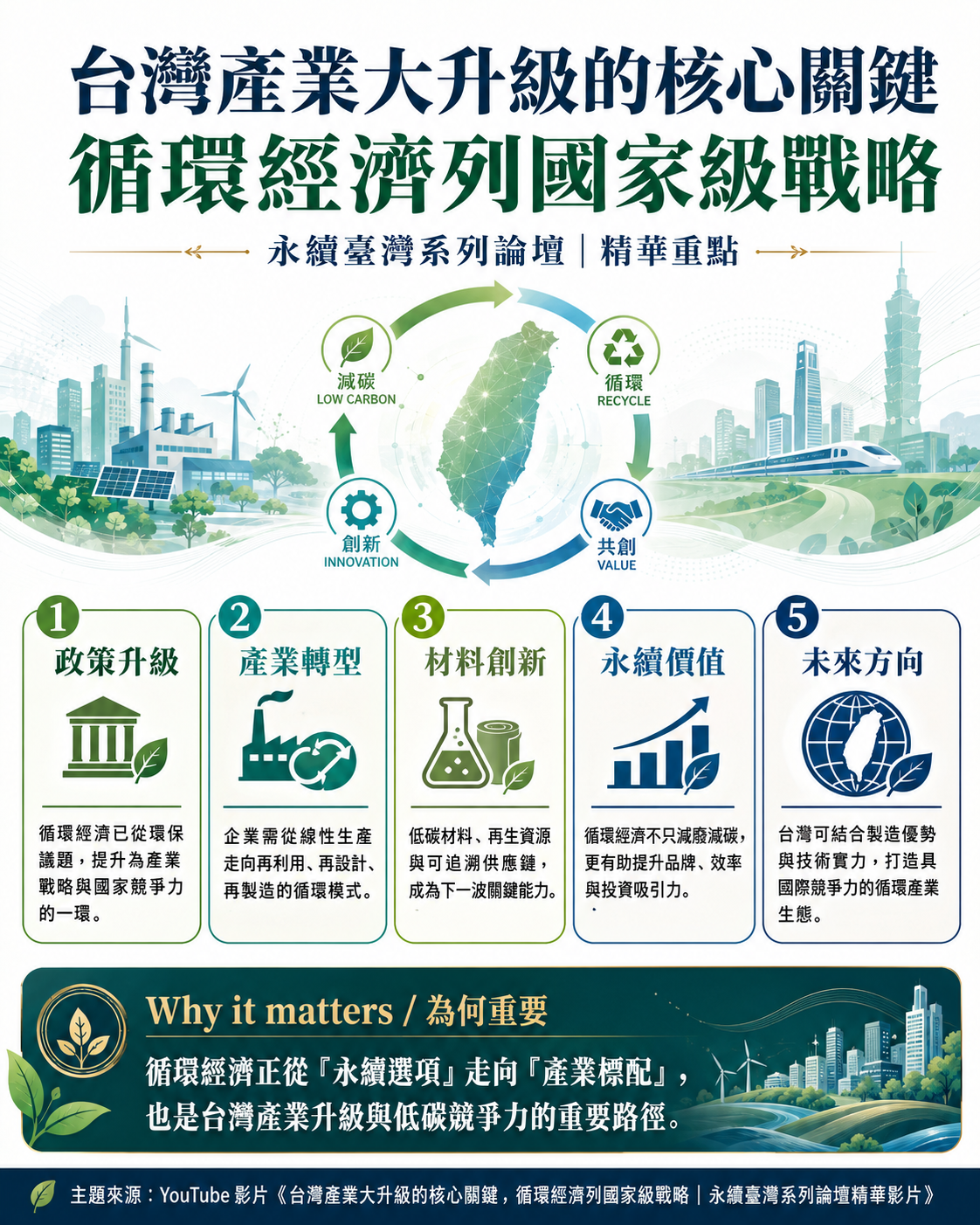
Circular Economy Becomes a Key Driver of Taiwan’s Industrial Upgrade
Circular economy is no longer only an environmental topic. It is becoming a strategic pathway for Taiwan’s industrial transformation, low-carbon competitiveness, and global market positioning.
As global net-zero trends, carbon management requirements, and sustainable supply chain expectations continue to rise, companies are facing more than just pressure to reduce emissions. They are entering a critical stage of industrial transformation. From policy development and manufacturing upgrades to material innovation and sustainable value creation, circular economy is becoming an important foundation for strengthening Taiwan’s global competitiveness.
From Sustainability Option to National-Level Strategy
In the past, circular economy was often viewed as part of corporate ESG or environmental management. Today, it is becoming a core strategy for industrial upgrading.
Through resource reuse, product redesign, remanufacturing, and low-carbon material applications, companies can reduce waste and carbon emissions while improving supply chain resilience, lowering raw material risks, and creating higher-value sustainable products.
For Taiwan, with its strong manufacturing capabilities and technical expertise, circular economy offers a major opportunity to connect material innovation, industrial transformation, and international market growth.
Material Innovation as the Next Key Force
Materials play a critical role in the circular economy transition.
Low-carbon materials, recycled resources, and traceable supply chains are becoming important factors in product design and procurement decisions. As brands and manufacturers place greater emphasis on product life-cycle carbon impact, material selection is no longer only about cost. It is also closely connected to carbon reduction, brand value, and long-term market competitiveness.
TYC Environmental Technology has long focused on recycled plastic material development and circular applications. By transforming recycled resources into high-performance, weather-resistant, and recyclable material solutions, TYC supports industries in reducing carbon emissions and moving recycled materials toward higher-value applications.
From Low-Carbon Materials to Sustainable Value
Circular economy is not only about waste reduction or recycling. It is about rethinking materials, products, and the entire industrial value chain.
For companies, adopting circular materials and low-carbon solutions can help respond to global supply chain demands for carbon reduction, traceability, and sustainability performance. It can also enhance brand image, increase investment appeal, and build stronger competitive advantages for future markets.
With its advanced manufacturing foundation and technical capabilities, Taiwan is well-positioned to build a circular industrial ecosystem. By combining policy support, industrial collaboration, and material innovation, Taiwan can further strengthen its role in the global low-carbon economy.
TYC Perspective
TYC believes that circular economy is a key pathway for Taiwan’s industrial upgrade and a powerful driver for businesses moving toward a low-carbon future.
Moving forward, TYC will continue to advance recycled material development, low-carbon product applications, and circular material solutions. By helping customers integrate sustainability into product design, supply chain management, and market applications, TYC aims to create a more resilient and valuable circular future.